Known as the ‘garden city’, Bangalore offers a leafy backdrop from which to explore the bustling streets of India’s third largest city. Cosmopolitan restaurants line wide avenues where foodies can delight in a smorgasbord of south Indian flavours. Tea lovers can indulge in fragrant cups of Chai and a spell of people-watching from any of the tea stalls dotted around the city. A booming IT industry coupled with a city that seeks to preserve its green and colonial heritage has created a modern and sophisticated metropolis. Recently voted the most liveable city in India, Bangalore makes a great base for travelling southern India.
Upon arrival in Bangalore Airport, Travel Counsellors Representative will meet and assist for your transfer to hotel for check in.
Day 2: In Bangalore
After breakfast, begin the tour of Bangalore.
Bull Temple
Bull Temple, also known as Nandi Temple is a religious shrine famous for its colossal image of a bull. Built in 1537 by Kempe Gowda, Bull Temple is primarily used for the worship of the sacred bull or Basava in Hinduism, Lord Shiva’s vahana.
Tipu Sultan’s Summer Palace
The intricately carved arches of the Tipu Sultan Fort have been built as per the Islamic style. Another major attraction of the fort is the well-preserved Ganapati temple situated inside it. Within the fort lies Tipu Sultan palace, which dates back to year 1790. Built entirely of teakwood, the palace was constructed as the summer residence of Tipu Sultan. The two-storied palace stands adorned with pillars, arches and balconies. On either side of the Palace are beautiful gardens, which lead to its main entrance. There are beautiful floral motifs embellishing the walls as well as the ceilings of the Tipu Sultan Palace in Bangalore. Tipu Sultan used to conduct the affairs of the state from the eastern and western balconies of the upper floor. After the death of Tipu sultan, the palace was used by the British as their secretariat, till the year 1867.
Lalbagh Botanical Garden
Lalbagh, for its unique achievement in nurturing the concept of horticulture and aiding the development of horticulture, has earned a pride of place among the gardens of the world and it has come to be regarded as one of the best gardens in the East for its layout, maintenance, scientific treasure and scenic beauty. The garden with well-laid out roads, paths, open spaces, shade and a good collection of many types of plant species attracts a large number of visitors.
Day 3: Bangalore- Mysore
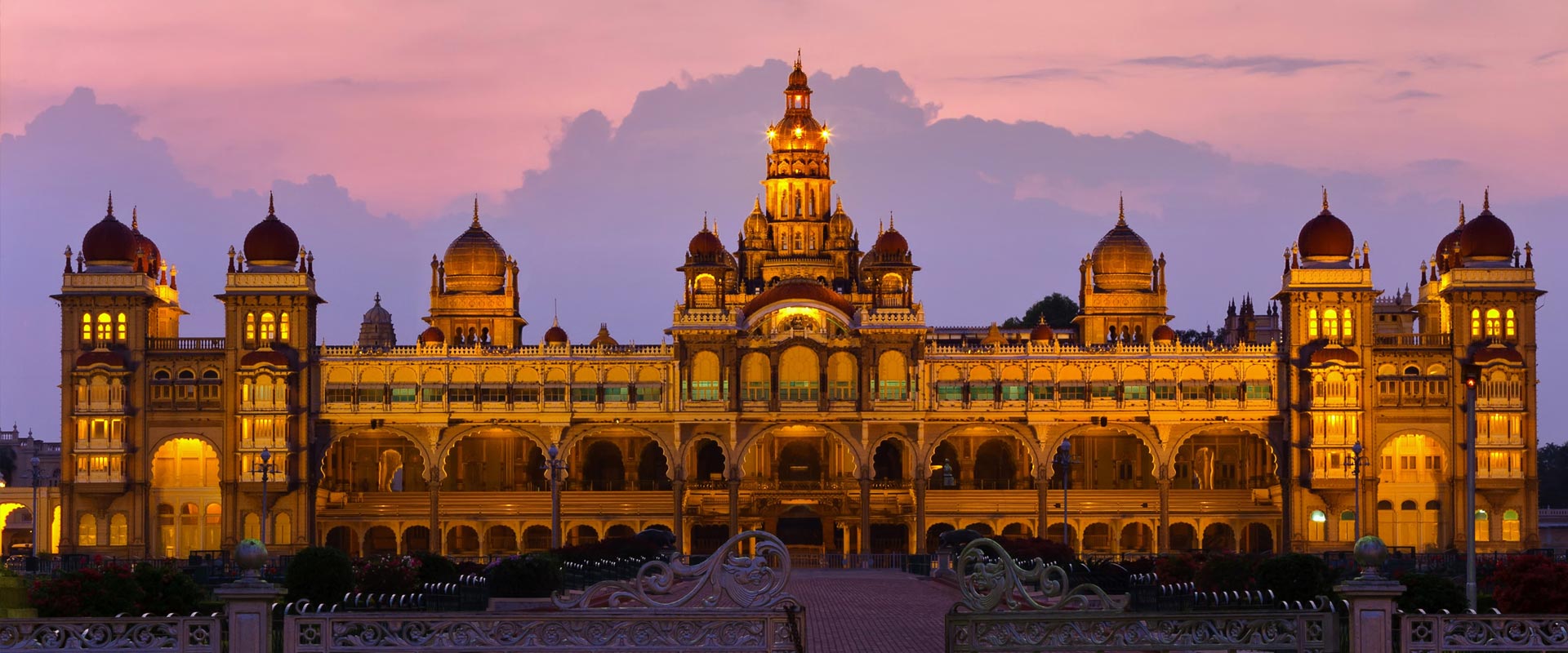
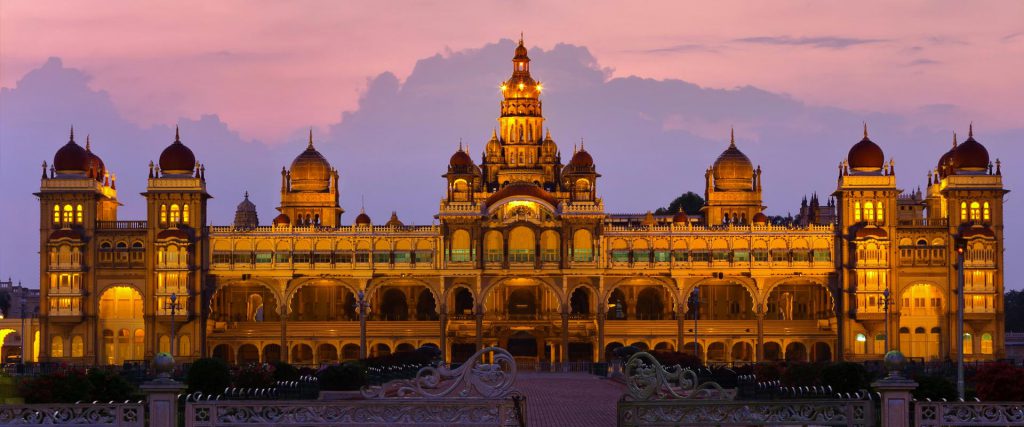
Serving as the capital of the Kingdom of Mysore from 1399 until 1947, the city of Mysore is a rich cultural and historical centre renowned for its beautiful Hindu palaces. Arguably the most captivating of these is the opulent Mysore Palace or Amba Vilas, particularly during the annual Dasara Festival, when every day after sunset it turns incandescent with the light of nearly 100 000 bulbs. In the modern context, Mysore is considered one of India’s cleanest and most efficiently planned cities, and has earned a reputation for its high quality sandalwood and silk.
After breakfast you will be driven to Mysore (Approx. 150 kms / 04 hours drive) with a stop enroute at Srirangapatnam
Srirangapatna
Srirangapatna alternatively known as Shrirangapattinam is a religious, cultural and historically significant town. This river island town’s name is sourced from the famous Ranganathaswamy Temple which dominates the town, and this temple resembles Hoysala and Vijayanagar architecture as it was restrengthened and modified after its initial construction in the 9th century.
Day 4: In Mysore
Morning enjoy walking tour of Mysore followed by a tour to Chamundi Hill.
The tour starts with K.R circle & Small clock tower, followed with Devaraj Market, It is about more than a hundred year old market which has lot to be explore in and around.Coffee break at Hotel Dasaprakash, to experience the local people & food. Sayyaji Rao Road It is the local shopping street of the city with ongoing local trade.
Visit Chamundi Hill – Perched atop a hill is a 12th century temple of Chamundershwari. About 13 Kms from Mysore by road these is also a 1000 step walking track for all those young at heart to try. The gigantic 4.8 meter tall monolith of Nandi the sacred vehicle of Lord Shiva is a marvel to watch. Also close to the temple stands a gigantic statues of the demon
Day 5: Mysore- Hassan
As one of the oldest towns in India’s Karnataka State, Hassan has a long and rich history. The town was founded by Channa Krishnappa Naik in the 11th century and remained under the rule of the Hoysala dynasty until the 13th century. It is the unique Hoysala architecture of this time that has made Hassan a popular tourist attraction as, during this period, numerous architectural marvels including a number of exquisite temples were constructed, many of which remain well-preserved today. However, it is not only the diverse variety of temples and unique architecture that draws visitors to Hassan, but also the town’s lovely markets, delicious local cuisine and remarkable natural beauty of the town itself and its extraordinarily scenic surrounding areas.
After breakfast you will be driven to Hassan (approx 140 kms/ 04 hours drive)
Day 6: In Hassan
After breakfast, visit the beautiful Hoysala temples at Belur and Halebid.
Belur
Set on the banks of Yagachi River in the Hassan District in the state of Karnataka, Belooru, or more commonly known as Belur is set amidst lush surrounds. It boasts a rich cultural heritage, historical significance and a variety of sacred temples. Belur is a popular tourist destination in the state of Karnataka. It features the Chennakeshava Temple Complex, is a 12th-century Hindu temple displaying some of the best of Hoysala architecture in the country. Other highlights include: Panduranga Temple, Shankaralingeshwara Temple, and Hoysaleshwara Temple and the spectacular Jain temples in Halebidu.
Halebidu
A city in the Karnataka state of India, Halebid features Hoysala structures. Halebid’s temple complex contains the Hoysaleswara, Kedareswara and Jain temples.
Day 7: Hassan- Kabini
Resting on the banks of the mighty River Kabini, the Kabini Forest Reserve (or the Kabini Wildlife Sanctuary) is a vast expanse of unspoiled wilderness comprised of forestland, water-bodies and steep fertile valleys. This extraordinary reserve forms the south-eastern section of the Nagarhole National Park and is home to the world’s largest population of Asiatic elephants (estimated at around 6,000). In addition to the impressive number of elephant, visitors are likely to spot a number of endangered and rare animal species including, among others: leopard, tiger, panther, sambhar, spotted deer, python, sloth bear, cheetal, crocodile, and over 250 species of bird.
After breakfast you will be driven to Kabini (approx 145 kms/ 3-4 hours drive).
Day 8: In Kabini
Enjoy the morning an afternoon safari into the Park. A drive into the forests on a first-come first-booked basis is life-altering. The peace of the massive trees broken only by the chatter of monkeys and birds, the gentle deer, towering elephants. Only those above 3 years of age are allowed on the trip.
Day 9: Kabini – Bangalore Departure
After breakfast, you will be driven to Bangalore (Approx. 220 kms / 5 hours drive] airport to board flight back home.