The thriving metropolis of Mumbai is a go-to destination for travellers curious to experience a modern Indian city. Lapped by the Arabian Sea, this urban seaside peninsula is a melting pot of old and new India. Towering office blocks and shiny apartment buildings shoulder crumbling grand dames of architecture. Men play cricket in the leafy central parks, taxis navigate the jam packed streets and families stroll along the seaside promenades of Mumbai, while kilometres away children beg on the peripheries of Asia’s biggest slum. In the wide avenue of Colaba’s high street, western culture overshadows the brightly lit storefronts, where Levi’s, Adidas and McDonalds vie for retail space.
Fly into Mumbai where you will be met by your Travel Counsellors Representative who will transfer you to your hotel of stay.
Day 2: In Mumbai
This day enjoy full day tour our Mumbai, starting with an excursion to Elephanta Caves [Closed on Monday] followed by a tour of Malabar Hills. The colonial bungalows that peppered the hillside in the 18th century have now been replaced by the apartment blocks of Mumbai. Drive past Flora Fountain, Dhobi Ghat, Marine Drive.
Elephanta Caves
Elephanta Caves is UNESCO World Heritage site is a fine specimen of rock cut architecture and art of medieval India. To state the trivial, there are no elephants in Elephanta! The name was given by the Portuguese as there was a large elephant sculpture in the island, when it was held by them. Otherwise this island was known as Gharapuri. The island is known for the 7th century caves with boldly executed mythical themes.
Gateway of India
Visit of the city’s long association with the British is reflected in the old world charm of its buildings made in the Indo-Saracen style. Some of the well-known landmarks are the Gateway of India – Located on the waterfront in Apollo Bunder area in South Mumbai, the Gateway is a basalt arch 26 metres (85 ft) high. It was a crude jetty used by fisher folks and was later renovated and used as a landing place for British governors and other distinguished personages.
In earlier times, the Gateway was the monument that visitors arriving by boat would have first seen in the city of Bombay. Its design is a combination of both Hindu and Muslim architectural styles. The arch is in Muslim style while the decorations are in Hindu style. The Gateway is built from yellow basalt and reinforced concrete. The stone was locally obtained, and the perforated screens were brought from Gwalior.
Prince of Wales Museum
Chhatrapati Shivaji Maharaj Vastu Sangrahalaya, formerly known as the Prince of Wales Museum of Western India, is one of the premier art and history museum in India. Situated on the southern tip of Mumbai on the ‘Crescent Site’, the Museum building is a fine example of the Indo-Saracenic style of architecture.
Today this building is listed as a Grade I Heritage Building and has been awarded the ‘2010 UNESCO Asia – Pacific Heritage Award’ for Cultural Heritage Conservation. It has been awarded first place for Heritage Building Maintenance by the Indian Heritage Society.
The aim at Chhatrapati Shivaji Maharaj Vastu Sangrahalaya (CSMVS) is to create awareness and sensitivity towards the country’s rich heritage through a visitor-friendly museum for the purposes of education, study and enjoyment of the public. The Museum offers a perfect leisure day out for all its visitors where you can engage with a world-class art collection and participate in fun-n-learn activities.
Today, CSMVS is a dynamic institution, buzzing with cultural activities, rotating exhibits, outreach and educational programmes. It is actively engaged in collaboration with international museums and cultural organizations.
Dhobhi Ghat
A unique feature of Mumbai, the dhobi is a traditional laundryman, who collects dirty linen, washes it, and return it neatly pressed. The most famous of these Dhobi Ghats Mahalaxmi dhobi ghat, the world’s largest washerman colony is at Saat Rasta near Mahalaxmi Station where almost 731 dhobis and their families work together in what has always been a hereditary occupation. This area is strangely popular with foreign tourists looking for a piece of quintessential Indianness. Mahalaxmi dhobi ghat was made in the year 1890 and since then it has been here to stay. Mahalaxmi dhobi ghat is one of the biggest dhobi ghat in Mumbai and one of the favorite tourist spots in Mumbai.
Marine Drive
Marine Drive (officially, “Netaji Subhash Chandra Bose Road”) is a 3km long, six lane concrete road in southern Mumbai which stretches north along the coastline, forming a natural bay. This C-shaped road links Nariman Point to Babulnath, and is situated at the foot of Malabar Hill. Known world over as Marine Drive, this tourist spot has also been called Sonapur by the locals of the city. Large crowds of people come to this place to stride along the beautiful walkway and to view the stunning sight of the setting sun at dusk. The scenic beauty of the perfectly lined palm trees offers its visitors an enthralling experience. Marine Drive is also referred to as ‘Queen’s necklace’, because the street lights make the road look like a string of pearls and create an illusion of a necklace, when viewed at night from any elevated point along the pathway of the drive.
Flora Fountain
Located in Mumbai, India, Flora Fountain is a heritage monument situated on the historic Dadabhai Naoroji Road, referred to as Mile Long Road. This exquisitely sculpted monument was constructed in 1864 by Richard Norman Shaw and engineered by James Forsythe at a total cost of about Rs. 47,000, which was a rather significant amount for that period.
Day 3: Mumbai- Nagpur- Tadoba
This day transferred to Mumbai airport in time for your flight to Nagpur. On arrival in Nagpur you will be met and transferred to Tadoba (approx. 150 Kms / 03 Hours drive)
Day 4-5: In Tadoba
Enjoy morning & evening shared jeep safaris in the National Park on both the days
[On Wednesdays the park remains closed in the evening]
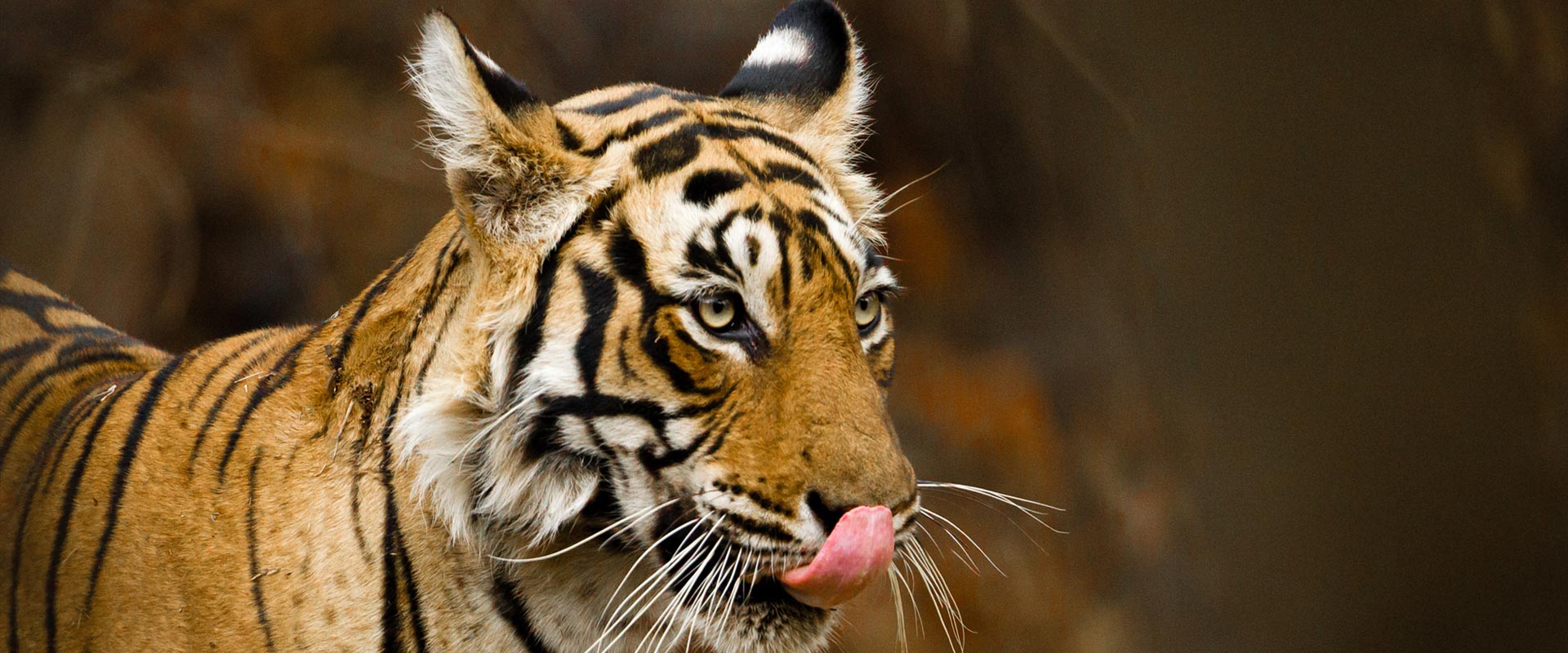
Tadoba National Park is a popular tiger reserve that’s affably known as ‘The Land of Tigers’ as large number of tigers (approx.43) are found here. Apart from the species of Bengal Tiger, this park is home to other mammals like Sloth Bear, Leopard, Rusty Spotted Cat, Gaur (Indian Bison), Indian Mouse Deer, Ratel, Sambar, Wild Pig, Spotted Deer, Flying Squirrel, Four Horned Antelope. Above all, there are approx.. 195 species of birds that include honey buzzard, crested serpent eagle, the shy jungle fowl, grey-headed fishing eagle, paradise flycatcher, etc.
Day 6: Tadoba- Pench
Resting in the lower southern reaches of the Satpuda Hills, in the central Indian state of Madhya Pradesh, Pench National Park is renowned for having the highest concentration of prey of any park in India, increasing the chances of seeing predatory cats such as leopard and tiger. This impressive expanse of wilderness features typical central Indian teak jungle and is bisected by the spectacularly scenic Pench River. Aside from the river, the park also contains a number of bamboo-lined jungle streams providing a valuable water source for the local wildlife which includes, among others: wild dog, sloth bear, wolf, jungle cat, hyena, jackal, gaur, sambar, and chital. Pench is also a bird lover’s paradise with over 250 species of bird inhabiting the area, including: parakeets, hornbills, kingfishers, orioles and wagtails, as well as a large selection of birds of prey.
This day drive to Pench National Park by your private chauffeured driven car [approx. 250 Kms /5-6 Hours drive]
Upon arrival, check into your Resort
Day 7-8: In Pench
Enjoy morning & evening shared jeep safaris in the National Park.
[On Wednesdays the park remains closed in the evening]
Pench National Park is very rich in fauna and it’s an abode to a large number of endangered species. The most dominant predator is Tiger and there are around 25 of them in these prey-rich woodlands. There are some other predators like dhol (Indian Wild Dog), leopard, hyena, wolf, jackal and jungle cat. Some prey species observed in the park are sambhar, chital, gaur, muntjac, langur, wild boar, and rhesus macaques. Commonly seen species are herd of deer.There are more than 170 species of birds comprising various migratory ones like peafowl, crow pheasant, junglefowl, red-vented bulbul, crimson-breasted barbet, magpie robin, lesser whistling teal, racket-tailed drongo, egret, pintail, shoveler, herons to name a few.
Day 8: Pench- Kanha
Also known as the Kanha Tiger Reserve, the Kanha National Park is widely considered to be the greatest of India’s wildlife reserves and the inspiration for Rudyard Kipling’s classic, ‘The Jungle Book’. This impressive expanse of wilderness is set in the central Indian state of Madhya Pradesh, encompassing about 950 square kilometres of lush rolling hills, peaceful rivers, saal and bamboo forest, and endless stretches of savanna grassland. This spectacularly scenic environment provides a diverse range of habitats for an extraordinary array of wildlife including tigers, leopards, jackals, swamp deer, foxes, porcupines, sloth bears, pythons, hare, chitals, gaur monkeys, mongooses, and hundreds of species of bird.
This day driveto Kanha National Park by your private chauffeured driven car [approx. 200 Kms /4-5 Hours drive]
Upon arrival, check into your Resort
Day 9-10: In Kanha
Enjoy morning & evening shared jeep safaris in the National Park on both the days
[On Wednesdays the park remains closed in the evening]
Enjoy game drives in Kanha National Park, through Sal and bamboo forests, and across Rolling Meadows, in search of tiger, leopard, chital, sambar, three-striped palm squirrel, common langur, and jackal. Kanha also has some 200 species of birds. At Sunset Point, one of the most beautiful areas of the park, a spectacular sunset can be seen.
Day 11: Kanha- Bandhavargh
One of the most popular parks in India, Bandhavgarh National Park is renowned for the highest density of tigers in the region. The park has a large array of wildlife including sloth bears, deer, leopards and jackals. Birdwatchers will delight in the plethora of bird species inhabiting all terrains from rocky crags to the auburn forest floor and mottled forest canopy. Declared a national park in 1968, Bandhavgarh was named after an ancient fort built on 800-metre-high (2,624 foot) cliffs in the park. From its zenith one can enjoy incredible views of the park, however prior permission is required.
This day drive to Bandhavgarh National Park by your private chauffeured driven car (approx. 220 Kms/ 5 Hours drive)
Upon arrival, check into your Resort
Day 12-13: In Bandhavgarh
Enjoy morning & evening shared jeep safaris in the National Park on both the days
[On Wednesdays the park remains closed in the evening]
Bandhavgarh is blessed with a large variety of residents -both in terms of animals and birds. It is famous for its Tiger sightings as the density of the tigers is the highest in this park. Other wild game includes, leopards, chinkaras, sloth bears, rhesus macaques, black faced langurs, jungle cats, hyenas, porcupines, jackals, foxes, wild dogs, chausinghas and ratels, among others.
Day 14: Bandhavgarh- Jabalpur – Delhi
India’s largest city, Delhi, has been one of the country’s commercial and economic hubs for centuries and, as a result, is incredibly rich in culture and history. Made up of the ancient walled city of Old Delhi and the more modern sector, New Delhi, the city encompasses a staggering array of beautiful architecture, notable monuments and age-old temples, including three UNESCO World Heritage Sites – the Red Fort, Qutab Minar and Humayun’s Tomb. Other key attractions include the 17th century Chandni Chowk marketplace – still one of the city’s most popular retail centres today, particularly for jewellery and traditional Indian saris; the iconic Bahà’i Lotus Temple – an award-winning architectural gem; and the Jama Masjid, India’s largest mosque.
This day transferred to Jabalpur airport (approx. 175 Kms / 4 Hours drive) to board your flight to Delhi
Upon your arrival at Delhi airport, Our Travel Counsellor Representative will assist and transfer to an airport hotel.
Day 15: Delhi Departure
At an appropritate time, your Travel Counsellor Representative will assist and provide you the necessary transfer to the international airport.