Places Visited New Delhi – Agra - Jaipur - Shahpura Bagh - Udaipur – Mumbai Tour Id : IN- 14
Itinerary Overview
This journey covers the much sought after “Golden Triangle” i.e. Delhi, Agra, Jaipur along with the unique village life at Shaahpura Bagh onward to the city of lake –Udaipur with gateway of India – Mumbai.
Tour Highlights
Explore the historic layers of the Old and New Delhi with its UNESCO world heritage sites.
A heritage walk along with rickshaw ride through the fabled markets of “Chandni Chowk”
Experience a journey on Indian Railways.
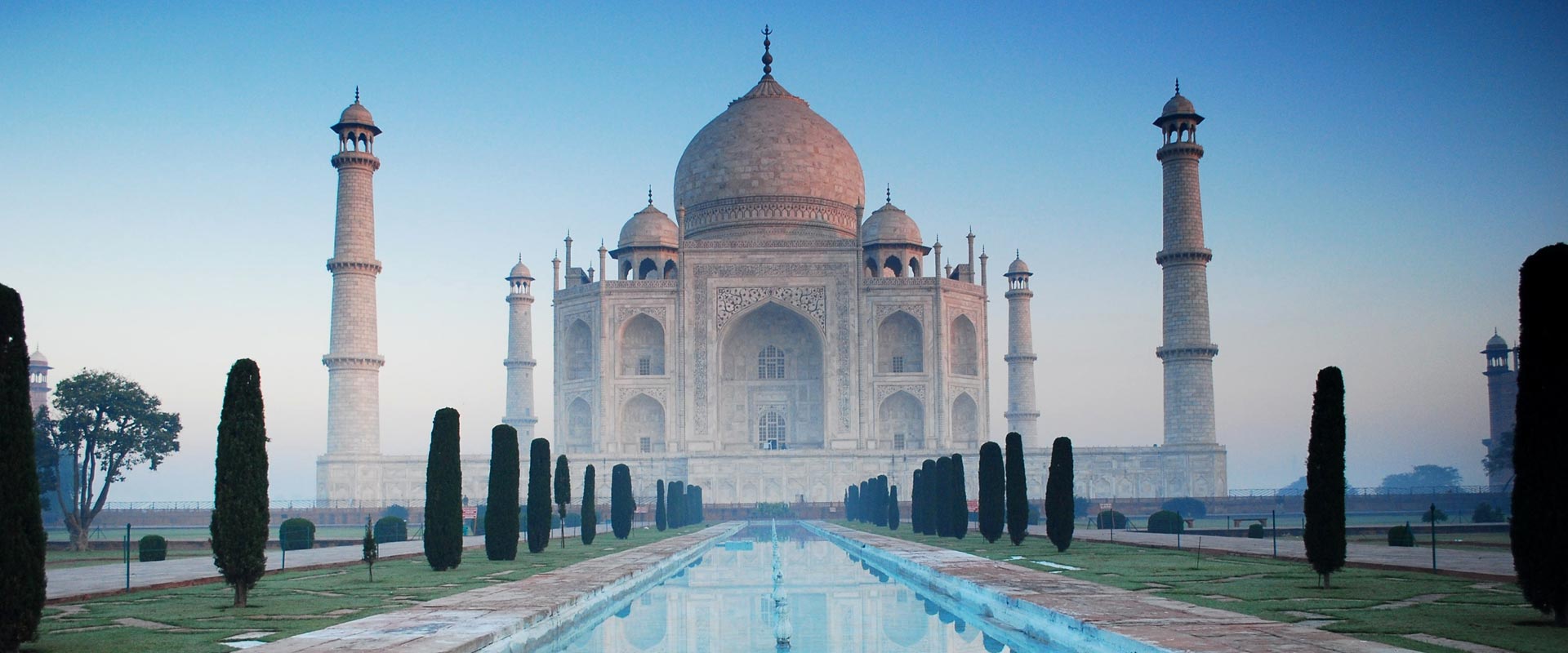
Visit to “Taj Mahal” – the universally admired masterpiece of the world’s heritage.
Explore the deserted city of Fatehpur Sikri.
Explore the bustling bazaars of the Pink City of Jaipur.
Cover the City Palace in Udaipur and Gateway of India in Mumbai.
Experience the life of local village peoples in Shahpura Bagh
Fly into Delhi where you will be received by your Travel Counsellors Representative who will assist and transfer you to the hotel of your stay.
Day 2: In Delhi
After breakfast, begin the day with a Heritage walk in Old Delhi followd by a tour of New Delhi. Drive past the imposing India Gate, the Parliament building and the Rashtrapati Bhawan (the President’s residence).
Old Delhi Heritage Walk
Delhi is an ancient city with history going back to 3000 BC. It has been mentioned extensively in numerous Indian epics like Mahabharat. But the Delhi we see and know about from written records starts from 736 AD. The city has been built, destroyed and rebuilt numerous times. Our heritage walks of Delhi are a perfect way of exploring this amalgam of old traditions, modern development and the unique heritage which makes it so interesting. These heritage walks are a perfect way to explore some of the lesser visited places and gain a new insight about the history, people and sights of Delhi city.
Humayun’s Tomb
The mausoleum complex of Humayun, India’s second Mughal Emperor, was commissioned by his widow in 1565 and was the first garden tomb to be built in India, taking seven years to complete. Humayun had travelled widely in Persia and Central Asia during his lifetime, and many of the architectural principles he brought back from these journeys were incorporated into the building at his wife’s instructions. With its double domes, decorative inlaid marble and vast garden with pools connected by channels, this 16th Century building set the stage for the style that culminated in the Taj Mahal almost 100 years later.
Qutub Minar
The majestic Qutub Minar is a heritage building located in downtown Mehrauli in India. Standing tall at 73-metres, the tower consists of 5 storeys with a flight of spiral stairs leading to its top. The walls are adorned with decorative motifs and Quranic inscriptions. At the foot of the tower lie other monuments of historical significance, such as the Quwwat-ul-Islam Mosque and the Iron Pillar of Delhi. The Amazing race Australia used this site as a pitstop in the second series.
Day 3: Delhi- Agra
Home of the world-famous Taj Mahal, Agra is one of India’s prime tourist destinations for specifically this reason, though its attractions also extend to an array of other impressive historical sights. These include the red-hued Agra Fort, the sacred Jama Masjid mosque and Itmad-ud-Daulah’s tomb, with its white marble facade embellished with intricate inlaid designs and semi-precious gems. The Taj, however, is in a league of its own and needless to say is a must-see for any visitor to the city. Commissioned by the Mughal emperor Shah Jahan in the 15th century as a memorial to his beloved wife Mumtaz Mahal, it is an architectural masterpiece of exquisite craftsmanship and perfect proportions.
After breakfast, experience a train ride to Agra by the superfast express train – Gatimaan Express @ 0810/0950 Hrs
Upon arrival at Agra, you will be assisted and taken directly to Agra Fort for the visit followed by check-in at the hotel. (Standard check in time at the hotel is 1400 Hrs). Later in the evening, visit Taj Mahal at sunset.
Agra Fort
Known as the Red Fort of Agra, this walled imperial city was founded in 1565 by the Emperor Akbar (1556-1605) and is a well-deserving UNESCO World Heritage site, located just 2.5 kilometres from the famous Taj Mahal. Its palaces, grand mosques and elaborate public hall are crafted from pink-red sandstone and are testament to an era when Indo-Muslim art, strongly marked by influences from Persia, was at its height. Emperor Shah Jahan, who built the Taj Mahal for his deceased wife, was imprisoned by his son Aurangzeb in Agra Fort. He is said to have died in the Musamman Burj, a marble tower he himself built, with one of the most alluring views of the Taj Mahal.
Sunset Taj Mahal
The iconic Taj Mahal is not only an architectural masterpiece, a UNESCO World Heritage Site and one of the new Seven Wonders of the World – it’s also the enduring legacy of a royal love story. It was commissioned in the 15th century by the Mughal Emperor Shah Jahan after the death of his third and favourite wife, Mumtaz Mahal, to serve as her final resting place and a symbol of his eternal affection for her. Combining Islamic, Persian, Ottoman Turkish and Indian design elements, it’s an awe-inspiring structure of elegant domes and white marble, which changes colour along with the light – pink at sunrise, pearly white in the afternoon and silver-gold in the full moon.
Day 4: Agra- Jaipur
Fringed by the rugged Aravali Hills, Jaipur is the capital and largest city in India’s northern state of Rajasthan. This city is famed for being India’s first planned city featuring a multitude of pink terracotta buildings within the walled historic centre, earning it the nickname,’The Pink City’. Jaipur falls within the Golden Triangle, a popular tourist circuit, which includes Delhi, Jaipur and Agra, and serves as a gateway to the neighbouring desert cities of Jaisalmer and Jodhpur. This colourful city is a combination of tradition and modernity and offers visitors vibrant bazaars, lavish palaces and ancient temples. The salmon-hued old city is home to the opulent City Palace, encompassing an impressive assortment of palatial structures, sprawling gardens, courtyards and buildings. Don’t miss the fairy-tale splendour of the Amber Fort, set against the backdrop of the arid landscape.
After breakfast, leave with the private chauffeur driven vehicle Jaipur (approx. 235 kms/ 06 hours’ drive) with a stop at Fatehpur Sikri.
Arrive Jaipur in the afternoon and check-in at the hotel.
Fatehpur Sikri
A highlight in the province of Uttar Pradesh, Fatehpur Sikri served briefly as the capital of the Mughal Empire from 1571 to 1585. This world heritage site is rated as one of the best preserved collections of Mughal architecture in India. Surrounded by a six kilometre wall, with the fourth being a lake at the time, a day can be spent exploring the elaborate structures within. Marvel at the impressive Jama Masjid mosque, the detailed palaces built for Emperor Akbar’s wives, the public and private discussion halls and vast ornamental pool; all of which took over 15 years to conceptualise and build.
Day 5: In Jaipur
After breakfast enjoy full day sightseeing tour of Jaipur with a photo stop at Hawa Mahal “the Palace of Winds”
Amer Fort
Amer Fort, officially known as the ‘Amer Palace’, is one of the most famous forts of Rajasthan attracting around 4000 to 5000 visitors a day during peak tourist season. The palace was named after the small town of Amer, where it is situated – only eleven kilometres from Jaipur. Perfectly picturesque, this 16th century hillside residence is well preserved, boasting grand pavilions and mirrored halls that open onto flourishing gardens and courtyards. Although the palace’s main construction started in 1592 by Maharaja Man Singh, it was added to over the years by successive rulers and continued to be occupied by them until Jaipur was built.
Jaipur City Palace
City Palace forms one of the most famous tourist attractions and a major landmark in Jaipur. The beautiful palace was built by Maharaja Sawai Jai Singh during his reign. Among the various forts and palaces of Jaipur, City Palace stands apart, with its outstanding art and architecture.
Jantar Mantar Jaipur
In 1734, the year of its completion, the Jai Singh Observatory was the last outpost of medieval science. From the outside, the eighteen fixed observational instruments look more like playground apparatus than sighting devices, but they were used to measure the position of the sun, stars and planets. Built by Jai Singh, the first Maharaja of Jaipur who founded the city in 1727, the observatory is one of a handful. Jai Singh, fulfilling a lifelong interest in mathematics and astronomy, built observatories in Delhi, Jaipur, Ujjain, Mathura and Benares. The Jaipur observatory is the largest and best preserved of these.
Day 6: In Jaipur
Breakfast at the hote. A day at leisure to explore the Pink city and it’s colorful bazaars. The state of Rajasthan is renowned for its colorful clothing, blue and white ceramics, embroidered and beaded shoes made from camel leather. These jootis, shoes with turned up toes, are perfect for an Aladdin look. Painted copies on silk of traditional miniatures featuring gods from the Hindu pantheon, such as Krishna, roll up into small and light gifts to take home
Day 7: Jaipur- Shahpura Bagh
Resting on the sun-drenched plains of Rajasthan, in northwestern India, the city of Shahpura serves as a midway stopover between Jaipur and Udaipur. This city is a little oasis amidst the dry hills of Rajasthan and is a place of pilgrimage for the Ram Snehi, a spiritual and religious group with traditions originating in the early 19th century. Shahpura is primarily untouched by modernity and seems eternally preserved in time. Surrounded by over 250 small lakes, the area is a bird watching paradise and an idyllic setting for visitors to enjoy boating on Shahpura’s picturesque lake. Other attractions include: the Ramdwara Temple, an ancient place of worship; the annual Phooldol Mela, a five-day religious festival; and the ancient, crumbling Dhikhola Fort, a great location for visitors to enjoy evening sundowners with views of the expansive landscape.
After breakfast, leave with your private chauffeur driven vehicle to Shahpura Bagh. [Approx.220 Kms/ 04 Hrs]. An interesting drive through the countryside. On arrival, check in at the Resort.
Rest of the day is at leisure for independent activities.
Day 8: Shahpura Bagh- Udaipur
Dubbed the ‘Venice of the East’, the city of Udaipur is built around three interconnected lakes – Lake Pichhola, Fateh Sagar Lake and the smaller Swaroop Sagar Lake – and encircled by the hills of the Aravalli mountain range. It is home to an array of ancient temples and fairy-tale palaces (several of the latter have been converted into luxury heritage hotels) and is known as one of Rajasthan’s most beautiful and romantic cities. Must-see attractions include the City Palace, the Lake Palace (set on a small island in the middle of Lake Pichola) and the Udaipur Solar Observatory – Asia’s premier solar-gazing site.
After breakfast, you will be driven to Udaipur (approx 220 kms/ 04 hours drive)
Arrive Udaipur and check in at the hotel.
Spend rest of the day at leisure.
Day 9: In Udaipur
After breakfast enjoy half day sightseeing tour of Udaipur. In the evening enjoy shared boat ride at lake pichola. (subject to water level)
Udaipur City Palace
Situated above Lake Pichola, Udaipur City Palace has housed many royals over four centuries who have each added their own unique preferences to the establishment. The palace is a one of a kind in Rajasthan. Udaipur City Palace was constructed entirely out of marble and granite which makes it highly luxurious. The inside is even more so with its inlays of coloured glass, engravings, towers, and balconies.
Jagdish Temple
Completed in 1651, Jagdish Temple is situated just outside the royal palace. The temple can be seen as soon as visitors enter the city. Puja’s and prayer time are the best time to visit when melodious chants from devotees float through the small interior. Visitors should make a point of climbing the temple’s many steps which invite them on a journey of discovery of the rich and vibrant history of Udaipur.
Saheliyon ki Bari
Built by Maharana Sangram Singh II as a garden for women, Saheliyon-ki-Bari or the Garden of the Maidens is a popular tourist destination. Along with a small museum, it has several attractions such as marble elephants, fountains, kiosks and a lotus pool.
Boat ride at Lake Pichola
Pichola Lake is one of the most beautiful lakes in Rajasthan. Located in the heart of Udaipur, Pichola is the oldest and one of the largest lakes in all of Udaipur. In 1362 AD Pichola Lake was built by Banjara. Later, Maharana Udai Singh, affected by the charm of this lake and extended the lake when he founded the city of Udaipur and also built a dam made of stone that is in the Badipol region on the shore of the lake. Pichola Lake is enveloped by lofty Palaces, temples, bathing ghats and elevated hills on all its sides.
Day 10: Udaipur- Mumbai
The thriving metropolis of Mumbai is a go-to destination for travellers curious to experience a modern Indian city. Lapped by the Arabian Sea, this urban seaside peninsula is a melting pot of old and new India. Towering office blocks and shiny apartment buildings shoulder crumbling grand dames of architecture. Men play cricket in the leafy central parks, taxis navigate the jam packed streets and families stroll along the seaside promenades of Mumbai, while kilometres away children beg on the peripheries of Asia’s biggest slum. In the wide avenue of Colaba’s high street, western culture overshadows the brightly lit storefronts, where Levi’s, Adidas and McDonalds vie for retail space.
Breakfast at the hotel
Fly Udaipur to Mumbai.
Day 11: In Mumbai
After breakfast enjoy full day tour our Mumbai, starting with an excursion to Elephanta Caves [Closed on Monday]
In the afternoon enjoy half day sightseeing tour of Mumbai.
Later visit Malabar Hills. The colonial bungalows that peppered the hillside in the 18th century have now been replaced by the apartment blocks of Mumbai. You will end your tour by driving past Flora Fountain, Dhobi Ghat, Marine Drive.
Elephanta Caves
Elephanta Caves is UNESCO World Heritage site is a fine specimen of rock cut architecture and art of medieval India. To state the trivial, there are no elephants in Elephanta! The name was given by the Portuguese as there was a large elephant sculpture in the island, when it was held by them. Otherwise this island was known as Gharapuri. The island is known for the 7th century caves with boldly executed mythical themes.
Gateway of India
Visit of the city’s long association with the British is reflected in the old world charm of its buildings made in the Indo-Saracen style. Some of the well-known landmarks are the Gateway of India – Located on the waterfront in Apollo Bunder area in South Mumbai, the Gateway is a basalt arch 26 metres (85 ft) high. It was a crude jetty used by fisher folks and was later renovated and used as a landing place for British governors and other distinguished personages. In earlier times, the Gateway was the monument that visitors arriving by boat would have first seen in the city of Bombay. Its design is a combination of both Hindu and Muslim architectural styles. The arch is in Muslim style while the decorations are in Hindu style. The Gateway is built from yellow basalt and reinforced concrete. The stone was locally obtained, and the perforated screens were brought from Gwalior.
Prince of Wales Museum
Chhatrapati Shivaji Maharaj Vastu Sangrahalaya, formerly known as the Prince of Wales Museum of Western India, is one of the premier art and history museum in India. Situated on the southern tip of Mumbai on the ‘Crescent Site’, the Museum building is a fine example of the Indo-Saracenic style of architecture.
Today this building is listed as a Grade I Heritage Building and has been awarded the ‘2010 UNESCO Asia – Pacific Heritage Award’ for Cultural Heritage Conservation. It has been awarded first place for Heritage Building Maintenance by the Indian Heritage Society.
Dhobhi Ghat
A unique feature of Mumbai, the dhobi is a traditional laundryman, who collects dirty linen, washes it, and return it neatly pressed. The most famous of these Dhobi Ghats Mahalaxmi dhobi ghat, the world’s largest washerman colony is at Saat Rasta near Mahalaxmi Station where almost 731 dhobis and their families work together in what has always been a hereditary occupation. This area is strangely popular with foreign tourists looking for a piece of quintessential Indianness. Mahalaxmi dhobi ghat was made in the year 1890 and since then it has been here to stay. Mahalaxmi dhobi ghat is one of the biggest dhobi ghat in Mumbai and one of the favorite tourist spots in Mumbai.
Marine Drive
Marine Drive (officially, “Netaji Subhash Chandra Bose Road”) is a 3km long, six lane concrete road in southern Mumbai which stretches north along the coastline, forming a natural bay. This C-shaped road links Nariman Point to Babulnath, and is situated at the foot of Malabar Hill. Known world over as Marine Drive, this tourist spot has also been called Sonapur by the locals of the city. Marine Drive is also referred to as ‘Queen’s necklace’, because the street lights make the road look like a string of pearls and create an illusion of a necklace, when viewed at night from any elevated point along the pathway of the drive.
Flora Fountain
Located in Mumbai, India, Flora Fountain is a heritage monument situated on the historic Dadabhai Naoroji Road, referred to as Mile Long Road. This exquisitely sculpted monument was constructed in 1864 by Richard Norman Shaw and engineered by James Forsythe at a total cost of about Rs. 47,000, which was a rather significant amount for that period.
Day 12: Mumbai- Departure
At an appropriate time, you will be assisted & transferred to the airport to board the flight for onward journey